A building can appear to be operating normally while individual spaces are already becoming uncomfortable.
Temperature may be within an acceptable range at the main control point, ventilation systems may be running, and no alarms may be active. However, this does not always reflect how people are actually experiencing each room, floor or occupied area.
Comfort issues often develop gradually. A meeting room may become too warm when occupancy increases. A poorly ventilated office may experience rising CO₂ levels. A colder area may remain unnoticed because the overall building average still appears normal.
By the time occupants complain, the issue may already have affected concentration, productivity and well-being.
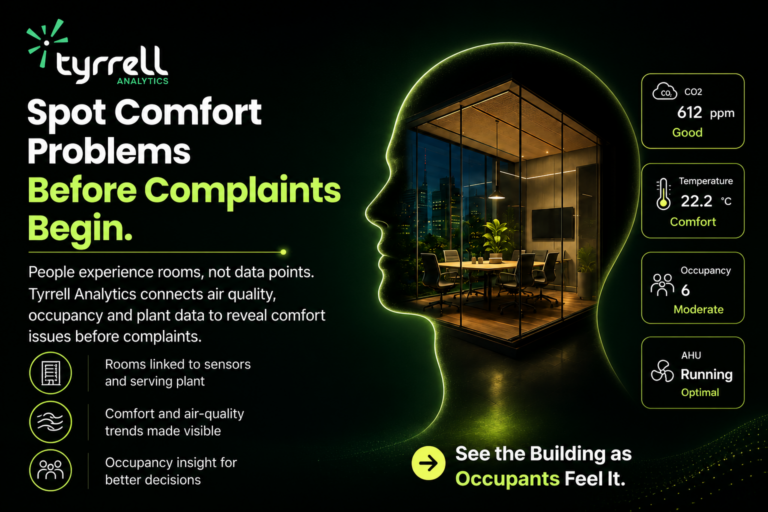
People Experience Rooms, Not Data Points
Building management systems collect large volumes of information, including temperature, CO₂, occupancy, air quality and plant performance data.
When this information is viewed separately, it can be difficult to understand what is happening within a particular space.
A temperature reading alone does not show how many people are present. An occupancy count does not explain whether the ventilation system is responding correctly. A CO₂ reading may indicate poor air quality, but without connected plant data, the underlying cause may remain unclear.
Without connected temperature, CO₂, occupancy and plant data, comfort issues can remain hidden.
Turn Disconnected Building Data into Clear Comfort Insights
Tyrrell Analytics organises building data into connected assets and spaces, providing a clearer view of how each environment is performing.
Instead of analysing isolated readings, facilities teams can see how occupancy, indoor air quality, temperature and building controls are interacting within individual rooms and zones.
This makes it easier to identify patterns that may otherwise be missed, such as:
- Rising CO₂ levels during periods of high occupancy
- Rooms that regularly overheat at particular times
- Ventilation systems that are not responding to demand
- Spaces that remain too cold despite normal building-wide conditions
- Repeated comfort issues linked to control settings or plant operation
By connecting this information, Tyrrell Analytics helps teams understand not only where a comfort issue is occurring, but also what may be causing it.
Identify Risks Before They Become Complaints
Earlier visibility allows building owners, facilities managers and operators to respond before discomfort develops into repeated complaints.
Teams can investigate likely causes faster, prioritise the areas that need attention and make more informed adjustments to building controls.
This may include reviewing ventilation schedules, adjusting temperature setpoints, checking plant performance or identifying spaces where occupancy patterns have changed.
Taking action earlier can help reduce troubleshooting time, improve occupant well-being and support more consistent environmental conditions across the building.
Improve Building Performance from the Occupant’s Perspective
Traditional building monitoring often focuses on whether equipment is operating correctly.
However, a system can be running without delivering the right conditions for the people using the space.
Tyrrell Analytics brings operational data together with occupancy and environmental information, helping teams assess building performance from the occupant’s perspective.
Backed by controls and BMS expertise, Tyrrell Analytics turns disconnected data into actionable comfort insights.
This supports more informed decision-making, faster investigation and a more proactive approach to occupant well-being.
See Your Building as Occupants Experience It
Comfort complaints should not be the first indication that something is wrong.
Connected building intelligence gives facilities teams the visibility needed to identify developing issues earlier, understand the likely causes and take action before occupants are affected.
Speak to Tyrrell Analytics about connected building intelligence for improved occupant well-being.